When my grandmother first showed me how to clean a clogged dryer vent, I’ll admit I didn’t take it seriously. Like many people, I assumed home maintenance required expensive equipment, professional services, or at least some level of technical expertise. In my mind, something as important as a dryer system had to be handled by trained technicians.
But Grandma had a different perspective.
She stood there, calm and confident, holding nothing more than a vacuum cleaner, a long flexible brush, and an old leaf blower she’d kept in the garage for years. With a small smile, she told me, “This keeps your dryer running right, keeps your home safe, and barely costs a thing.” At the time, it sounded too simple to be true. Over the years, I’ve learned that she was absolutely right.
What many homeowners don’t realize is that a clogged dryer vent is far more than a minor inconvenience. It’s a serious safety issue that often goes unnoticed. According to safety data, thousands of house fires are linked to dryers every year, and one of the leading causes is a failure to properly clean the vent system. Lint, which is highly flammable, builds up over time and can quietly create a dangerous environment behind walls or in ductwork.
Beyond safety concerns, lint accumulation also affects performance. A clogged vent forces your dryer to work harder, which increases energy consumption, extends drying times, and puts unnecessary strain on the appliance. You may even notice a faint burning smell, which many people ignore until it becomes a bigger problem.
Grandma understood these risks firsthand. Years ago, she experienced a small incident involving a dryer, and from that moment on, she made vent cleaning a regular habit. It wasn’t optional in her house—it was essential.
When she taught me her method, she didn’t just explain the steps. She showed me how to do it carefully, patiently, and correctly. Over time, I came to appreciate not only how effective her approach was, but also how much money and stress it could save.
The first step she always emphasized was safety. Before doing anything, you need to unplug the dryer. If it’s a gas dryer, you should also turn off the gas supply. This simple precaution prevents accidents and ensures you can work without risk. After that, gently pull the dryer away from the wall just enough to access the vent. There’s no need to move it too far—just enough to create working space.
Next comes the initial cleaning. Using a vacuum with a hose attachment, remove any visible lint and dust around the vent opening and the floor behind the dryer. Even if you regularly clean the lint trap, you’ll likely be surprised at how much debris collects in that small area. This step not only clears the surface but also prepares the vent for deeper cleaning.
The real difference comes with the flexible vent brush. This tool is designed to reach deep into the ductwork, bending and turning as needed. Slowly insert the brush into the vent, twisting gently as you go. The goal is to loosen lint that has built up along the interior walls. Patience is key here—rushing can damage the duct or push debris further inside.
Once you’ve loosened the buildup, go back with the vacuum and remove all the debris that has been dislodged. This combination of brushing and suction is what makes the process so effective. It ensures that lint isn’t just moved around but actually removed from the system.
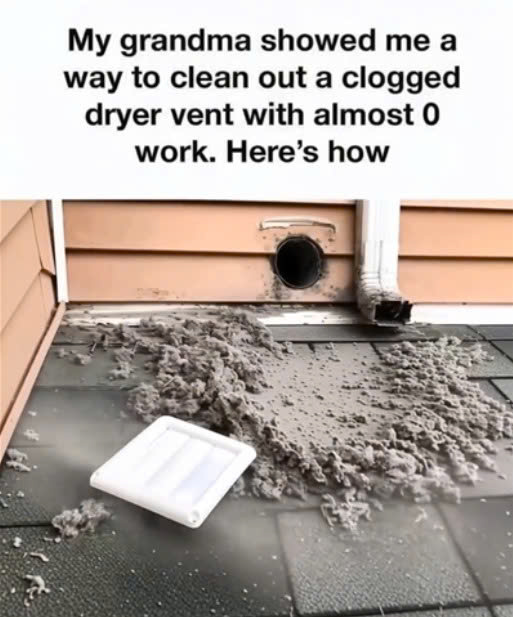
Then comes Grandma’s favorite step—the one that always made this method stand out. Head outside to where your dryer vent exits the house. Carefully remove the vent cover and check for any blockages, including small nests or debris. Then, using a leaf blower, blow air into the vent from the outside.
The results are immediate and surprisingly satisfying. Dust, lint, and small particles are pushed out completely, restoring proper airflow throughout the entire system. This step ensures that the entire vent, not just the portion near the dryer, is fully cleared.
After that, it’s time to reassemble everything. Replace the vent cover, reconnect the dryer, and slide it back into place. Run a short cycle with a small load to test it. If everything was done correctly, you’ll notice the difference right away. The dryer should run more efficiently, feel cooler on the outside, and dry clothes faster and more evenly.
What makes this method so effective is that it addresses the problem from multiple angles. Instead of relying on just one technique, it combines mechanical cleaning, suction, and airflow to remove buildup completely. Many people only clean the lint trap or vacuum near the dryer, leaving the deeper sections of the vent untouched.
By cleaning the entire system, you not only improve safety but also extend the life of your appliance. A dryer that doesn’t have to work as hard will last longer, use less energy, and perform better overall. And the cost of doing this yourself is minimal compared to hiring a professional service.
For me, this process became more than just a household task. It turned into a meaningful routine that reminded me of Grandma’s wisdom. She approached everything with care and intention, showing that even small actions can have a big impact.
Every time I clean my dryer vent now, I think of her. I move a little slower, pay attention to the details, and appreciate the value of doing things properly. It’s a simple task, but it brings a sense of control and reassurance that your home is safer.
Over time, I’ve shared this method with friends and family. Many of them were just as skeptical as I was at first, but once they tried it, they understood. It’s practical, effective, and easy to do.
In a world where people often rely on expensive solutions, this old-fashioned approach still holds its value. It proves that you don’t always need advanced tools or professional help to maintain your home. Sometimes, all you need is the right method and a little patience.
Cleaning your dryer vent may not seem like a big deal, but it can make a significant difference. It reduces fire risk, improves efficiency, and saves money in the long run. More importantly, it gives you peace of mind knowing that you’ve taken a simple step to protect your home and your family.
Grandma used to say, “Take care of the little things, and the big problems won’t have a chance to grow.” After years of following her advice, I can confidently say she was right.
This method is simple, reliable, and effective—and it’s one of those rare pieces of wisdom that truly stands the test of time.