It was supposed to be one of those days families look back on years later with easy smiles. A simple outing by the lake. Nothing extravagant, nothing planned down to the minute. Just sunshine, shared laughter, and the comforting illusion that everything in our lives was exactly as it should be.
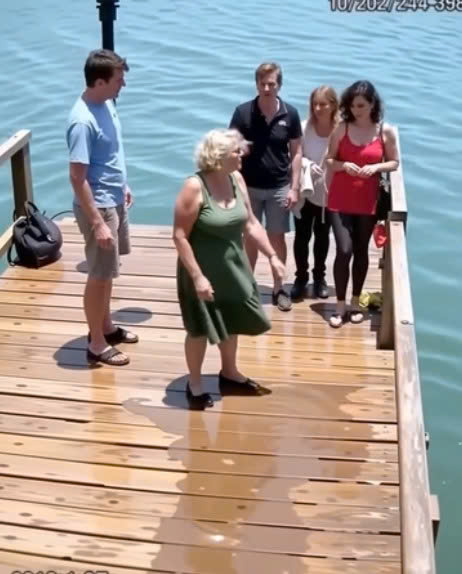
The sun rested warmly on my shoulders — gentle, not harsh — the kind of warmth that invites you to breathe more deeply and linger in the moment. A soft breeze drifted across the water, carrying the fresh scent of grass and earth. The lake shimmered beneath the open sky, smooth and reflective like a sheet of glass stretching endlessly before us.
I stood near the shore, watching my grandson run back and forth. His laughter rang out freely, untouched by responsibility or time. His joy was infectious. In that moment, I remember thinking this was what all the years of effort had been for — the sacrifices, the long nights, the endless giving. Family together. Smiling. Whole.
For decades, I believed something deeply: that family was the one place where love didn’t come with conditions. Where respect didn’t fade as hair turned gray and bodies slowed down. I believed the care I had poured into others would naturally return to me when I needed it most.
I believed the bonds built through patience, consistency, and quiet devotion would protect me when I became vulnerable.
That belief unraveled in seconds.
Without warning, my grandson shoved me forward. There was no malice in his face — only the careless energy of childhood, the kind that doesn’t yet understand consequences. A playful grin. A sudden push that came too fast, too hard.
I lost my balance.
One step became none. The solid ground disappeared, and I tipped forward into the lake.
The cold shock was immediate. It wrapped around me, stealing the air from my lungs. My breath caught painfully in my throat as panic surged. My arms felt heavy. My legs sluggish and unresponsive. Instinct took over before I could think. I flailed, grasping for air, for stability, for something solid.
The water tightened my muscles and numbed my skin. Fear was not dramatic or exaggerated — it was raw and physical. I struggled to keep my head above the surface and turned toward the shore, expecting alarm. Concern. Someone rushing forward.
Instead, I saw my daughter-in-law smiling.
Not startled. Not worried.
Amused.
“Don’t be so dramatic,” she said lightly, dismissing my struggle as if it were a minor inconvenience — or worse, entertainment.
Something inside me shifted then. Something deeper than fear.
The cold stung my skin, but what hurt more was the realization settling in my chest. With devastating clarity, I understood that the people I loved most did not see me as someone in danger.
They saw me as fragile. Inconvenient. Expendable.
I pulled myself from the lake, soaked and shaking. Bruises were already forming, but humiliation burned hotter than the cold ever could. As I stood there dripping, hearing laughter behind me, years of quiet truths surfaced.
This wasn’t an isolated moment.
It was the result of countless small dismissals. Impatient sighs when I asked questions. Jokes at my expense disguised as humor. Conversations that stopped when I entered the room. Decisions made for me instead of with me.
They had forgotten — or perhaps never fully acknowledged — who I was.
They no longer saw the woman who built a home from nothing alongside her husband. The woman who balanced work and responsibility without complaint. The woman who sacrificed sleep, comfort, and personal dreams so her family would feel secure.
Instead, they saw age.
They saw vulnerability.
They saw something to manage.
That day at the lake didn’t change them.
It changed me.
In the days that followed, I grew quieter — not from defeat, but from clarity. I stopped explaining myself. Stopped defending my decisions. Stopped trying to prove I was capable.
I let them believe their assumptions.
And I listened.
They spoke freely now. They discussed assisted living facilities as if I weren’t present. They speculated about my finances and decision-making ability. They spoke about “what to do with her” as though I were an item to be rearranged.
I didn’t argue.
I observed.
I began documenting everything — not out of anger, but out of necessity. Words. Patterns. Behaviors. How impatience was disguised as concern. How jokes concealed contempt.
This wasn’t about revenge.
It was about protection.
What they didn’t know was that my late husband and I had planned carefully years ago. We understood that kindness can sometimes be mistaken for weakness. Together, we created a trust designed to preserve dignity — not to reward entitlement.
Every safeguard was placed intentionally. Our legacy was never meant to be controlled by those who underestimated us.
They assumed aging meant powerlessness.
They assumed silence meant confusion.
They were wrong.
When they eventually checked my accounts, expecting vulnerability, they found them empty. Confidence cracked into panic. Conversations became hushed.
I chose not to confront them.
I chose to leave.
No dramatic exit. No bitter words. I packed what mattered and walked away.
They reported me missing.
But I wasn’t missing.
I was exactly where I needed to be.
I met with advisors — not to punish anyone, but to ensure no one could control my life again. What was meant to humiliate me became the moment that freed me.
Today, I live in a peaceful senior community where dignity is not something you must repeatedly earn. My days are calm and meaningful. I tend to flowers in the morning, sunlight warming my face. I share stories with younger people who listen with genuine interest, not obligation.
I have learned that strength is not measured by how much pain you endure.
It is measured by what you choose to walk away from.
True strength is quiet. It does not argue or demand validation. It observes, decides, and moves forward.
People often mistake gentleness for weakness.
But gentleness is power.
The power to remain humane without surrendering self-respect.
I did not fight my family.
I did not seek revenge.
I chose myself.
Now, when I think about the lake — the cold water, the laughter that tried to diminish me — I feel no bitterness. Only gratitude for the clarity it brought.
What was meant to break me revealed a strength I had nearly forgotten.
This is my freedom.
This is my triumph.
And this is only the beginning of the peace I was always meant to live.