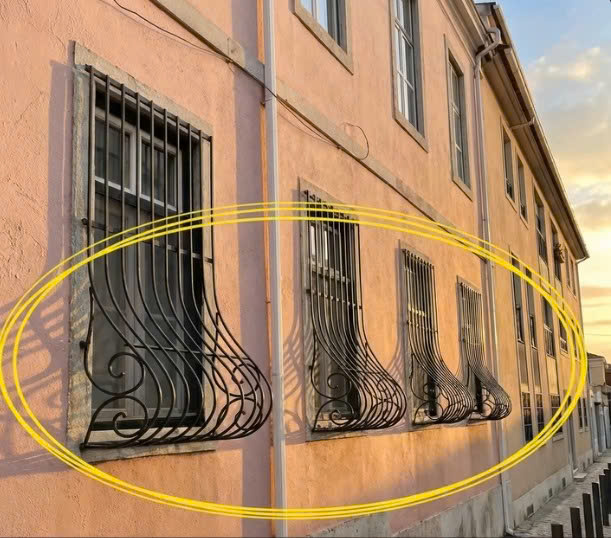
If you have ever strolled past an older house and noticed window bars that curve outward near the bottom, you may have stopped for a moment and wondered why they were made that way. At first glance, these bulging shapes, often referred to as “potbellied” window bars, can seem decorative, unusual, or even slightly impractical. Yet their form is not accidental. Behind those outward curves is a long history of thoughtful design shaped by safety concerns, dense urban living, and the everyday needs of people who wanted their homes to feel secure without feeling sealed off from the world outside.
The use of window bars dates back hundreds of years, especially in growing cities of the eighteenth and nineteenth centuries. As urban populations increased, homes were built closer together, streets became narrower, and crime became a constant worry for many families. Early window bars were designed with a single purpose in mind: security. They were straight, rigid metal rods placed tightly across windows to prevent unwanted entry. While effective, these bars created a sense of confinement, limiting airflow, blocking views, and making homes feel closed in and isolated from street life.
As city neighborhoods grew more crowded, people began to rethink how window bars could serve more than one purpose. Windows were essential sources of light and ventilation, and they also offered a connection to the street below. Flat bars made it difficult to open windows fully or interact with the outside without sacrificing safety. In response, homeowners and metalworkers began experimenting with new shapes. Over time, the outward-bulging design emerged as a practical solution that balanced protection with everyday comfort.
The outward curve of potbellied window bars was carefully considered. By extending the bars away from the window, a small pocket of usable space was created between the interior and the street. This allowed fresh air to circulate freely while maintaining a strong physical barrier. In neighborhoods where buildings were close together and sidewalks were always busy, this buffer zone made daily life more comfortable and secure. Residents could lean slightly outward, look down the street, or speak with neighbors without exposing their homes to danger.
This extra space also proved useful in surprisingly practical ways. People placed flower pots within the curved area, allowing plants to receive sunlight while staying safely within the home’s boundaries. Laundry could be draped over rods to dry in the breeze. Parents could watch their children playing outside, keeping an eye on them while remaining indoors. In these ways, the bars became more than security features; they became extensions of daily life.
Over time, potbellied window bars on social and cultural significance. In many older neighborhoods, windows functioned like small front porches. The outward curve allowed residents to remain part of community life even when they stayed inside. Sunlight, sounds of conversation, and the rhythm of the street flowed more naturally into the home. These small interactions helped maintain a sense of connection and belonging, which was especially important in tightly packed urban areas.
The curved bars also offered opportunities for personal expression. Homeowners painted them to match their façades or arranged plants and decorations in creative ways. In some regions, particularly in Mediterranean and Latin American cultures, metalworkers transformed window bars into works of art. Wrought iron was bent into elegant scrolls, curves, and patterns that blended beauty with strength. Even where designs remained simple, the idea that safety and aesthetics could coexist became widely accepted.
Architecturally, potbellied window bars represent an important adaptation to city life. Unlike suburban homes with yards and porches, urban residences often lacked safe outdoor space. Windows became the main point of interaction with the outside world. The outward curve offered a compromise, providing a sense of openness without sacrificing security. It showed that small design changes could significantly improve quality of life in dense environments.
Regional variations added to the richness of this design. In Europe, especially in Italy and Spain, curved bars often featured intricate detailing. In Latin America, they became common in colonial-era homes overlooking lively streets. In the United States, cities such as New York, Boston, and New Orleans adopted similar designs in older neighborhoods. There, narrow row houses and busy sidewalks made multifunctional windows essential, and potbellied bars met that need effectively.
Today, these bars remain visible in historic districts, quietly telling stories of the past. They reflect lives once lived around open windows: neighbors chatting, children laughing, plants growing in sunlit spaces. Modern architects still draw inspiration from this design, incorporating outward-curving bars into contemporary homes where appropriate. The goals remain familiar: safety, usability, and connection.
Even now, potbellied window bars offer practical benefits. They improve ventilation, allow safe observation of the street, create small outdoor spaces for plants or decorations, and help prevent accidents. Combined with thoughtful design, they continue to meet both functional and human needs.
Ultimately, potbellied window bars endure because they are rooted in human experience. They represent problem-solving shaped by real challenges and real lives. Each curve reflects a desire for safety, comfort, and connection. More than metalwork, they are reminders that good design serves people first, proving that even the smallest architectural details can carry lasting meaning and value.