In early spring of 2024, visitors to McGee Creek Reservoir in Atoka County, Oklahoma, encountered a sight that left many puzzled and uneasy. While boating or fishing near the shoreline, several people noticed large, jelly-like masses attached to submerged branches and tree limbs just beneath the water’s surface. The blobs appeared translucent, uneven, and unfamiliar, leading some observers to wonder whether they were signs of pollution, invasive species, or something far more unusual.
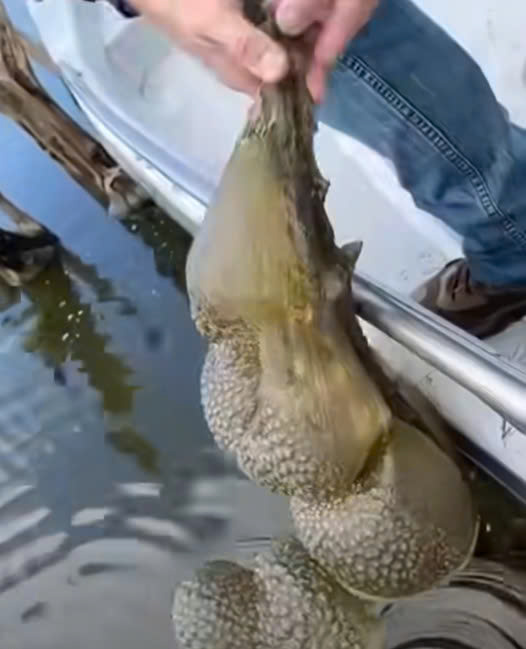
Photos of the strange formations quickly circulated online, sparking speculation and concern. To many, the gelatinous clusters looked alien, almost otherworldly, and their sudden appearance raised questions about water safety and environmental health. For locals unfamiliar with such organisms, the sight was unsettling, especially because the blobs seemed to cling tightly to underwater structures and varied in size, some growing as large as basketballs.
Within days, wildlife officials and biologists stepped in to clarify the situation. According to the Oklahoma Department of Wildlife Conservation, the jelly-like masses were not mysterious invaders or dangerous organisms at all. Instead, they were colonies of bryozoans, commonly known as moss animals. Though rarely noticed by the public, bryozoans are ancient aquatic creatures that have existed for hundreds of millions of years.
Bryozoans are tiny invertebrates that live together in colonies composed of many individual units called zooids. Each zooid is microscopic, but when thousands group together, they form visible colonies that can take on rounded or irregular shapes. These colonies often attach themselves to hard surfaces underwater, such as rocks, docks, or submerged branches, which explains their presence on tree limbs in the reservoir.
One of the reasons bryozoans appear so unusual is their texture. They produce a protective outer layer made primarily of chitin, a natural material also found in insect shells. Underwater, this structure absorbs water and feels soft and jelly-like to the touch. When exposed to air, however, it can quickly become firmer, adding to the impression that the blobs are something unnatural or unfamiliar.
Bryozoans tend to thrive when environmental conditions are favorable. Clean water, stable temperatures, and abundant microscopic food sources allow colonies to grow rapidly. During cooler months or periods of optimal water quality, they can expand significantly, becoming much more noticeable than usual. This rapid growth can surprise lake visitors who may not have seen them before, even if the organisms have been present for years.
Despite their strange appearance, bryozoans pose no threat to humans, pets, fish, or boats. They do not sting, bite, or release toxins, and they are not parasites. In fact, they are considered beneficial to aquatic ecosystems. Bryozoans feed by filtering tiny particles, algae, and microorganisms from the water, helping to improve clarity and overall water quality.
Environmental scientists often view the presence of bryozoans as a positive sign. Their abundance usually indicates that a lake or reservoir has relatively clean water and a balanced ecosystem. Because they are sensitive to pollution and drastic environmental changes, bryozoans tend to disappear in degraded or contaminated waters. Their presence at McGee Creek Reservoir suggested that the lake’s ecological conditions were healthy and stable.
For many residents and visitors, learning the true nature of the jelly-like blobs brought a sense of relief. What initially appeared alarming turned out to be an example of nature quietly doing its work beneath the surface. Wildlife officials emphasized that there was no need for concern or removal, as bryozoans are a natural and temporary part of the aquatic environment.
Public curiosity surrounding the blobs also highlighted how unfamiliar many people are with the complex life that exists in freshwater ecosystems. Lakes and reservoirs are home to countless organisms that often go unnoticed unless conditions make them visible. Bryozoans are just one example of how ancient species continue to coexist with modern environments, largely unseen until circumstances bring them into view.
Experts encouraged the public to observe but not disturb the colonies. Touching or removing them serves no purpose and can disrupt the ecosystem. Instead, officials suggested using the opportunity to learn more about freshwater biology and the importance of maintaining clean waterways.
The appearance of bryozoans at McGee Creek Reservoir ultimately became a reminder that not everything unfamiliar is harmful. Nature often presents forms that challenge expectations, especially when people encounter organisms outside their everyday experience. In this case, science provided reassurance, replacing fear with understanding.
As interest in environmental awareness grows, moments like these offer valuable lessons. They encourage curiosity, respect for natural processes, and trust in scientific explanation. What began as a viral mystery ended as a quiet affirmation of ecological health, demonstrating that even the strangest sights can have simple, reassuring explanations rooted in nature’s long history.
For Oklahoma’s wildlife experts, the event also underscored the importance of public education. Helping people recognize harmless organisms like bryozoans fosters appreciation rather than alarm. In doing so, it strengthens the connection between communities and the natural environments they enjoy.
In the end, the jelly-like blobs of McGee Creek Reservoir were not signs of danger or disruption. They were evidence of a living system functioning as it should, quietly supporting balance beneath the water’s surface.