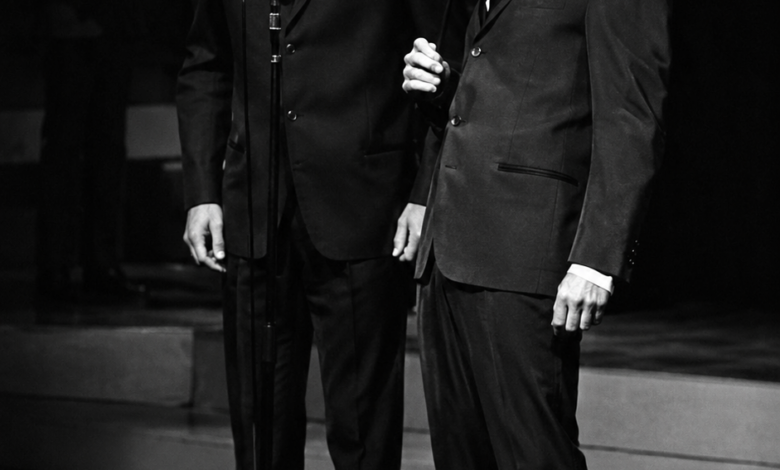
Only a few months earlier, The Righteous Brothers had enjoyed enormous success with “You’ve Lost That Lovin’ Feelin’,” a song that would go on to become one of the most celebrated recordings in popular music history. Much of that success was associated with legendary producer Phil Spector and his famous “Wall of Sound” production style. That signature approach featured layers of instruments, rich orchestration, and a dramatic sonic atmosphere that made songs feel larger than life.
For many fans and industry observers, Spector’s production style became closely linked to The Righteous Brothers’ identity. As a result, when the producer moved on to other projects, doubts quickly emerged. Critics and music executives questioned whether the duo could continue creating hit records without the man who had helped shape their most recognizable sound. Some believed their best days were over. Others wondered if they would ever recapture the emotional impact that had made them stars.
At this pivotal moment, an unfinished song entered the picture.
Written by the acclaimed songwriting team of Barry Mann and Cynthia Weil, “(You’re My) Soul and Inspiration” had originally been started earlier but remained incomplete. It seemed as though the composition was waiting for exactly the right moment to be finished and recorded. That moment arrived in 1966 when Bill Medley recognized the song’s potential and decided to take a bold step forward.
Instead of relying on an outside producer to guide the project, Medley assumed production responsibilities himself. It was a significant risk. Producing a major recording required confidence, technical knowledge, and creative leadership. More importantly, it meant placing the future of the duo’s career in their own hands. If the song failed, critics would likely point to the absence of Phil Spector as the reason. If it succeeded, it would prove that The Righteous Brothers were capable of defining their own musical path.
From the opening notes, “(You’re My) Soul and Inspiration” establishes an atmosphere of deep emotion and longing. The arrangement carries a dramatic quality reminiscent of the duo’s earlier recordings, yet it also introduces a more personal and intimate feeling. The music swells with intensity, creating a sense of anticipation that draws listeners into the story being told.
Bill Medley’s rich baritone voice anchors the verses with confidence and restraint. His delivery conveys vulnerability without sacrificing strength, allowing the emotional weight of the lyrics to unfold naturally. As the song progresses, Bobby Hatfield’s soaring tenor enters with breathtaking power. The contrast between their voices creates a dynamic tension that became one of the duo’s defining characteristics.
When Hatfield reaches the chorus and sings the title phrase, the performance feels deeply genuine. Rather than sounding like a rehearsed lyric, the words come across as an emotional confession. His voice rises with passion and conviction, transforming a simple declaration into something unforgettable. It is this authenticity that continues to resonate with listeners decades later.
The timing of the song’s release was particularly significant. By 1966, popular music was undergoing rapid changes. New sounds and styles were emerging, influenced by youth culture, social change, and artistic experimentation. Many artists were embracing themes of rebellion and independence. Against this backdrop, “(You’re My) Soul and Inspiration” stood apart by fully embracing romantic emotion.
Instead of following trends, the song celebrated sincerity. It focused on love, devotion, and emotional connection with complete confidence. Audiences responded enthusiastically. The record quickly climbed the charts and reached the number one position on the Billboard Hot 100. Its success demonstrated that heartfelt performances and powerful vocals still had a place in the evolving musical landscape.
Beyond its commercial achievements, the song reflected the personal journey of The Righteous Brothers themselves. On the surface, the lyrics describe emotional dependence and the importance of a loved one. Yet beneath that message lies another story. By producing the record independently and guiding it to success, Bill Medley and Bobby Hatfield were demonstrating their own artistic independence.
The achievement carried symbolic significance. It showed that their talent extended beyond the influence of any single producer. While Phil Spector had undoubtedly contributed to their earlier success, the emotional power of their music ultimately came from their voices, chemistry, and ability to connect with listeners. “(You’re My) Soul and Inspiration” proved that the essence of The Righteous Brothers belonged to them.
Over the decades, the song has maintained its popularity and cultural relevance. It has appeared in films, television programs, radio retrospectives, and countless playlists devoted to classic music. Each new generation discovers the recording and experiences the same emotional impact that audiences felt when it first reached the airwaves.
Part of the song’s enduring appeal lies in its universal theme. Nearly everyone can relate to the feeling of finding someone who provides comfort, motivation, and meaning during life’s challenges. The lyrics capture that experience with honesty and vulnerability, allowing listeners to connect their own memories and emotions to the music.
The song also serves as a reminder of an era when vocal performances often took center stage. While production techniques and musical trends continue to evolve, the emotional authenticity of a great voice remains timeless. Medley and Hatfield delivered performances that continue to inspire admiration from musicians and fans alike.
Today, “(You’re My) Soul and Inspiration” stands as one of the defining recordings of The Righteous Brothers’ remarkable career. More importantly, it remains a testament to their resilience, talent, and determination. At a moment when many doubted their future, they responded not with excuses but with one of the most memorable performances of their lives. In doing so, they proved that they were never merely the product of a producer’s vision. They were, and continue to be, a powerful musical force defined by genuine emotion, extraordinary vocals, and a lasting ability to move audiences around the world.