The six-month mark can be strangely deceptive. In relationships, it’s when the early glow fades and reality settles in. In loss, it’s when the casseroles stop arriving and people quietly return to their own lives. In our situation, this unexpected, stitched-together version of family, it was the moment when polite smiles began to crack, revealing sharp, complicated truths underneath. We kept saying we were “making it work,” though none of us could quite define what that meant anymore. Alyssa was no longer simply the paid caregiver, yet she wasn’t fully “family” either. She existed in an uncomfortable middle space that confused neighbors, unsettled paperwork, and forced all of us to confront things we had never planned to face.
The first real challenge wasn’t emotional at all. It was legal. Three weeks after the DNA results came back, my mother insisted we visit our longtime family attorney, Mr. Abernathy. His office smelled of lemon polish and old leather, the same scent I remembered from my father’s estate planning years earlier. This was a place where feelings were translated into documents and signatures. We sat together awkwardly: my mother in her wheelchair, me stiff in a wingback chair, and Alyssa perched on the edge of the sofa like someone expecting to be asked to leave. Mr. Abernathy studied us carefully and asked if we truly intended to amend the trust to include a third beneficiary. My mother answered firmly, saying Alyssa was Robert’s daughter and deserved acknowledgment. When proof was requested, I slid two DNA test results across the desk. The room fell quiet except for the ticking clock. My father, it turned out, had said nothing of this hidden chapter of his life.
Alyssa finally spoke, softly, explaining she didn’t want land or disruption, only recognition and perhaps help with student loans. Watching her minimize her own needs stirred something in me. I told her she didn’t get to reduce herself out of guilt. If she was his daughter, then she was entitled to the truth in full, even if it complicated everything. Mr. Abernathy sighed, warned us about paperwork and taxes, and began taking notes. Walking out into the sunlight afterward, I realized I had chosen a side. I had defended her, publicly and permanently.
If the legal process was math, the social fallout was war. In a town of eight thousand people, nothing stays secret for long. At the grocery store, when a local gossip hinted that Alyssa was “just help” and implied she didn’t belong, I felt anger rise. I introduced Alyssa clearly and loudly as my sister. The silence that followed felt like a line being drawn. Alyssa later whispered that the entire town would know by noon. I told her that was fine. Whispering only hurts when you let it.
As summer faded into fall, my mother decided it was time to clear out the attic. On a rainy Saturday, Alyssa and I climbed into the dust and insulation, sorting through decades of my father’s life. That was when we found the locked footlocker. Inside were notebooks filled with meticulous entries documenting money he had sent, needs he had quietly covered, and moments he had watched from a distance. There were unsent letters filled with regret and longing, and photographs taken from afar. Alyssa cried, realizing he had known her dreams and watched her grow without ever stepping forward. It didn’t excuse his choices, but it changed the story. She wasn’t forgotten. She was hidden.
We didn’t tell my mother. Some truths heal, and others only reopen wounds. Carrying that secret together bonded us in a way nothing else could. By Thanksgiving, the fragile peace was tested again. My aunt arrived skeptical and sharp-tongued, openly accusing Alyssa of manipulation. When she crossed a line, I told her to leave my house. Defending Alyssa in front of everyone shifted something fundamental. She was no longer a guest. She was protected.
The real proof of that bond came months later when my mother suffered a medical emergency in the middle of the night. Alyssa recognized the signs immediately, called for help, and stayed calm until professionals arrived. Watching her advocate for my mother in the hospital, I understood how much we owed her. Without Alyssa, we might have lost Mom before morning. Sitting together in hard plastic chairs, exhausted and shaken, we talked quietly about love, regret, and how strange it was to share a parent from such different angles.
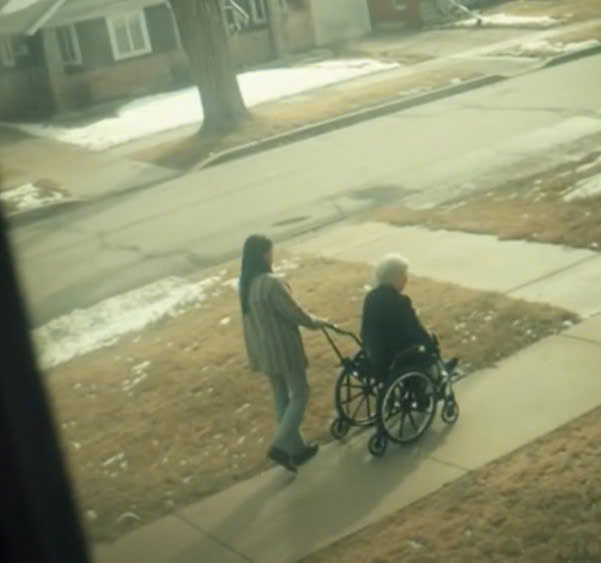
Life settled into a new normal after that. Care was shared. Help was accepted. The family expanded instead of breaking. On a warm spring afternoon, I watched Alyssa walk my mother to the garden bench, laughing together like they had always known each other. I felt no jealousy, no resentment. Only fullness. When my phone buzzed with another distant DNA match, I ignored it. I already had enough family. The fracture in our lives hadn’t destroyed us. It had let the light in, and in that light, we were building something honest, resilient, and real.